
Bathroom Cleaner Ingredients to Avoid (and What to Use Instead)
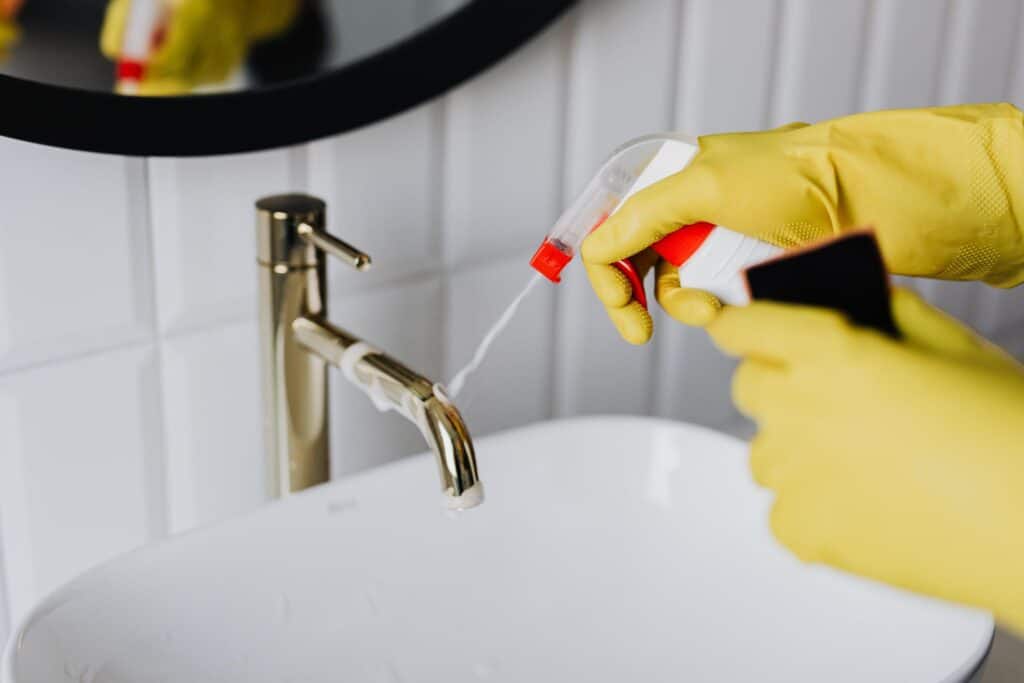
Sometimes, cleaning your bathroom can feel a lot like a lab experiment gone wrong: potent chemicals and fumes so intense that they make your eyes water. The cleaning industry has long convinced us that if a product didn’t burn your nose or smell like industrial bleach, it doesn’t work.
The reality behind a commercial “ocean breeze” or “island-fresh” scent is a combination of volatile organic compounds (VOCs), ammonia, and phthalates—toxic chemicals that you don’t want lingering in your home. Knowing which bathroom cleaner ingredients to cross off your shopping list is the first step toward a healthy home.
At Purple Fig, we prioritize non-toxic cleaning, and in this article, we’re peeling back the label on conventional bathroom products and sharing professional, eco-friendly swaps we swear by.
Why Your Bathroom Cleaner Matters More Than You Think
Bathrooms are typically enclosed rooms with minimal ventilation. Even with an exhaust fan running, covering your shower with conventional chemicals creates a high concentration of airborne irritants. Data from the American Lung Association proves that the VOCs in standard bathroom cleaners trigger chronic respiratory issues, asthma attacks, and allergic reactions.
When you’re using a conventional cleaner spray or a heavy-foaming bathroom cleaner, those chemicals settle on your surfaces, their gases evaporate into the air you breathe, and eventually wash down the drain into your local water systems. And if your home runs on a septic system, harsh formulas can disrupt the bacterial balance needed to break down waste. Our recommendation? A septic-safe bathroom cleaner. Opting for non-toxic bathroom cleaners is the start to a fresh, healthy space.
Five Common Bathroom Cleaner Ingredients to Avoid
The next time you pick up a product at a supermarket, turn it around and check the label for these high-risk culprits.
1. Chlorine Bleach
Bleach is a severe respiratory irritant that can exacerbate asthma and burn sensitive skin. The biggest danger bleach introduces, though, is accidental mixing. If bleach interacts with ammonia or acids (also common in other products), it creates a toxic gas that’s dangerous to your health.
→ Where You’ll Find It: Bleach is the primary active ingredient in heavy-duty mold and grout removers, whitening toilet bowl cleaners, and general brighteners.
2. Ammonia
Like bleach, ammonia is highly volatile. It can cause severe irritation to your eyes, skin, and throat.
Especially if you’ve got littles or pets in the house, ammonia is one of the harshest chemicals you need to avoid. It lingers in the air long after you’ve wiped down surfaces and overall lowers your indoor air quality.
→ Where You’ll Find It: Ammonia is a favorite in streak-free glass cleaners and formulas designed to polish porcelain fixtures or act as a mirror and bathroom tile cleaner.
3. Synthetic Fragrances and Phthalates
Another scary truth is that companies aren’t legally required to list the specific chemicals that make up a “fragrance.”
Chances are, there could be dozens of synthetic toxins hiding behind a single word on a label. Many of these are also endocrine disruptors, meaning they interfere with your body’s natural hormones.
→ Where You’ll Find It: Many generic-brand cleaners boasting a “fresh rain” or “Hawaiian breeze” scent, or overpowering floral scents, use these synthetics.
4. Sulfamic or Hydrochloric Acid
These corrosive acids may break down minerals quickly. They also emit highly irritating fumes and can permanently etch natural stone or even ruin metal fixtures if left on too long.
→ Where You’ll Find It: Lime, scale, and rust removers are big on these acids, as well as aggressive liquid bathroom drain cleaner products.
5. Butoxyethanol
This one is the heavy lifter often used to dissolve stubborn soap scum, water stains, and oily grime.
As another VOC, butoxyethanol is a solvent that easily evaporates into the air. Inhaling these vapors can cause immediate throat irritation, dizziness, and headaches.
In the long term, it’s been linked to more severe systemic toxicity, including liver and kidney stress.
→ Where You’ll Find It: This powerful solvent is often hidden under names like Butyl cellosolve or masked under generic essential grease cutters.
The Risks of Using Harsh Bathroom Cleaners
The downsides to these toxic bathroom cleaner ingredients are clear. You may experience coughing, dizziness, or skin rashes during your weekend refresh. These symptoms may go away when the air “clears, but the long-term effects are what concern health professionals the most.
Consistent exposure to airborne toxins from conventional bathroom cleaning products can lead to chronic respiratory damage over time.
Also, every time a corrosive spray is rinsed down your tub or sink, toxic chemicals journey through our local infrastructure.
From water quality imbalances to adverse effects on aquatic life, these chemicals are silent killers that strain our ecosystems.
Safer Alternatives That Still Get the Job Done
The good news is that transitioning to a non-toxic bathroom cleaner setup is surprisingly simple and relies on basic chemistry.
For Soap Scum and Hard Water Stains
Replace corrosive acids. Mixing equal parts of distilled white vinegar and water with a few drops of plant-derived dish soap in a spray bottle will do the magic. The natural acidity breaks down mineral buildup on glass and tile without damaging your lungs.
For Grout and Tub Scrubbing
Replace bleach powders. Sprinkle baking soda directly onto wet surfaces and scrub with a damp cloth or sponge. It acts as a gentle, safe abrasive that deodorizes as it cleans.
For Toilet Bowls
Replace harsh chemical gels. Use a solid dash of baking soda, then a cup of vinegar. Let it fizz for ten minutes, then scrub—and we promise you, you’ll thank us.
For a deeper look into eco-friendly, non-toxic bathroom cleaners, check out our guide on The Dirty Glove: Toilet Edition.
How Professionals Choose the Right Bathroom Cleaner
At the end of the day, a clean bathroom shouldn’t require a warning label. At Purple Fig, we’ve spent years vetting the tools of the trade to move beyond the basics while keeping things green. We only use advanced non-toxic products alongside hospital-grade, food-safe disinfectants for our Austin house cleaning services.
If you love the idea of a deeply sanitized home but want to avoid chemical fumes, our dedicated professionals ensure a pristine, healthy finish. If it’s our Signature Clean you’re looking for, you get a week’s worth of intensive cleaning in a single afternoon. Our Essential Clean is best if you’ve already done a deep clean and only need an expert to maintain it.
Ready to find your perfect level of clean? Our house-cleaning services in Austin are just a call away!
